
An Ultimate Guide to Oman for UAE Residents


Oman is one of the easiest international escapes from the UAE, whether you want a two-night weekend, a mountain road trip, a desert stay, or a longer coastal holiday. Travelers can fly directly to destinations such as Muscat and Salalah or drive across the border when the route and vehicle arrangements make sense.
What makes Oman particularly rewarding is its variety. Muscat combines culture with beachfront resorts, Musandam offers dramatic coastal scenery close to the UAE, Nizwa and the Hajar Mountains are ideal for road trips, while Salalah becomes a completely different destination during the summer Khareef season.
Oman at a Glance for UAE Residents
| Capital | Muscat |
|---|---|
| Currency | Omani rial (OMR) |
| Main tourism regions | Muscat, Musandam, Al Dakhiliyah, Ash Sharqiyah, Dhofar |
| Typical trip length | 2–7 days |
| Best general season | October–April |
| Special season | Salalah Khareef, broadly June–September |
| Good for | Road trips, beaches, mountains, culture, wadis and desert stays |
Oman works particularly well for UAE-based travelers because you can adjust the trip to the time available. Muscat is realistic for a normal weekend, while four to seven days gives you enough time to combine several regions.
Do UAE Residents Need a Visa for Oman?

Visa requirements are one of the most important things to check before traveling because UAE residence alone does not determine whether you can enter Oman without arranging a visa.
UAE and Other GCC Citizens
Citizens of GCC countries are treated differently from expatriate GCC residents for immigration purposes. GCC nationals should check the current entry document requirements before departure, particularly if traveling with children or using an ID rather than a passport.
Rules can change, so confirm the requirements that apply to your nationality and travel document immediately before the trip.
UAE Residents Who Are Not GCC Citizens
If you live in the UAE but hold another nationality, eligibility depends on factors including your passport nationality, GCC residence status, and the visa category available to you.
Oman's online visa eligibility system asks travelers to select their passport nationality and indicate whether they are residents of a GCC country. Some GCC residents may qualify for a specific GCC resident tourist visa, while travelers of certain nationalities may have other visa or visa-exemption options.
Before booking, check:
- Your passport validity
- Your UAE residence validity
- Whether you need an eVisa
- Which visa category applies to you
- How long the permitted stay is
- Whether your profession or other residency details affect eligibility
- Whether the visa allows the type and number of entries you need
Do not assume that every UAE resident can simply obtain a visa at the border.
Flying to Oman from the UAE

Flying is usually the simplest option for a short Muscat or Salalah trip, particularly when you only have a weekend.
Dubai to Muscat
Nonstop Dubai–Muscat flights take roughly 1 hour 10 minutes, making Muscat one of the most accessible international destinations from Dubai. Once you arrive, Muscat International Airport is convenient for most of the capital's main hotel districts.
Abu Dhabi to Muscat
Abu Dhabi–Muscat is similarly convenient, with nonstop flying time of around 1 hour 10 minutes. For a two-night weekend, flying can make more sense than driving because you avoid border queues and a longer road journey.
Abu Dhabi to Salalah
Salalah became more accessible from Abu Dhabi in 2026 with a new nonstop Etihad service. The flight takes around 1 hour 40 minutes, with additional frequency during the Khareef peak. That makes southern Oman much more practical for a short UAE summer escape than traveling there overland.
Driving from the UAE to Oman

A Dubai-to-Oman road trip gives you greater flexibility, particularly if your itinerary includes Musandam, Nizwa, the mountains, or several stops. Before leaving, make sure you have the documentation required for both the travelers and the vehicle.
You may need:
- Passports and valid UAE residence documents
- Any required Oman visa or prior entry authorization
- Vehicle registration documents
- Authorization if the vehicle is not registered in your name
- Motor insurance valid in Oman
- Cross-border permission from the rental company if using a rental car
Not every UAE rental company permits vehicles to enter Oman, so arrange this before collecting the car rather than at the border.
Border waiting times can also increase significantly around Eid, UAE public holidays, school breaks, and long weekends.
Where to Go in Oman
Muscat — Best for First-Time Visitors

Muscat is the easiest introduction to Oman. Visit Sultan Qaboos Grand Mosque, explore Mutrah Corniche and Mutrah Souq, and spend time around Old Muscat before enjoying the city's beachfront hotels.
The Royal Opera House Muscat adds another cultural option, while boat trips provide a chance to experience the coastline from the water. Muscat also works well as the beginning or end of a longer road trip.
Musandam — Best for a UAE Road Trip
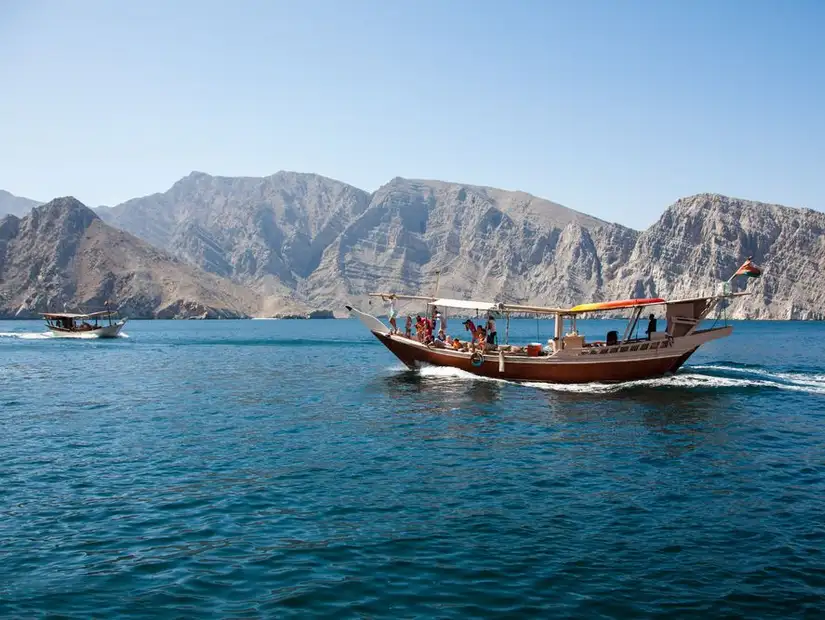
Separated geographically from mainland Oman, Musandam is particularly convenient from the northern UAE. Khasab is the main base for exploring the peninsula, where steep mountains descend into deep coastal inlets known as khors.
Traditional dhow cruises usually combine sightseeing with swimming or snorkeling and are the signature experience. For travelers based in Dubai or Ras Al Khaimah, Musandam can work as a short road-trip alternative to flying somewhere for the weekend.
Nizwa — Best for Heritage
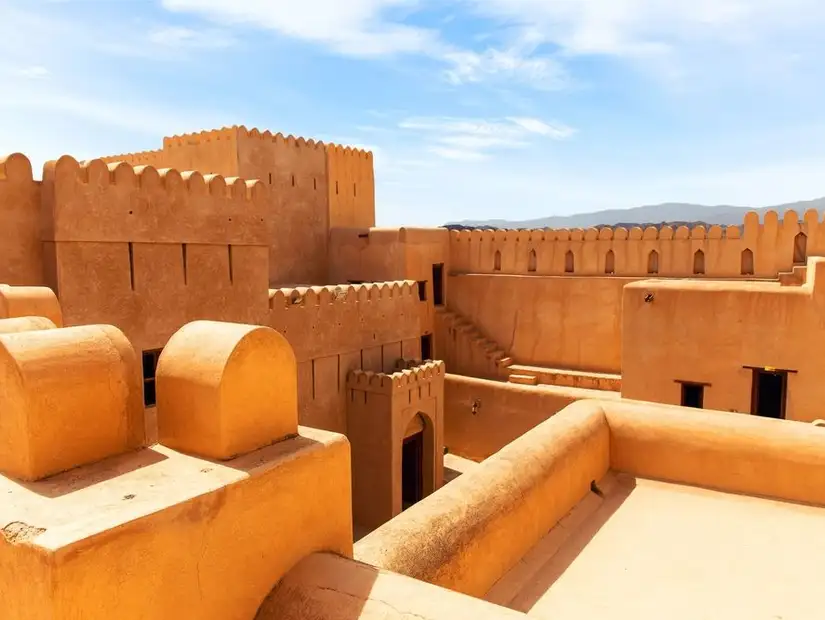
Nizwa is one of the best stops for travelers interested in Omani history and traditional architecture. Nizwa Fort and the nearby souq form the center of most visits, while the town also provides a convenient base for exploring villages and mountain areas in Al Dakhiliyah. It fits naturally into a Muscat–Nizwa–mountains road trip.
Jebel Akhdar & Jebel Shams — Best for Mountains
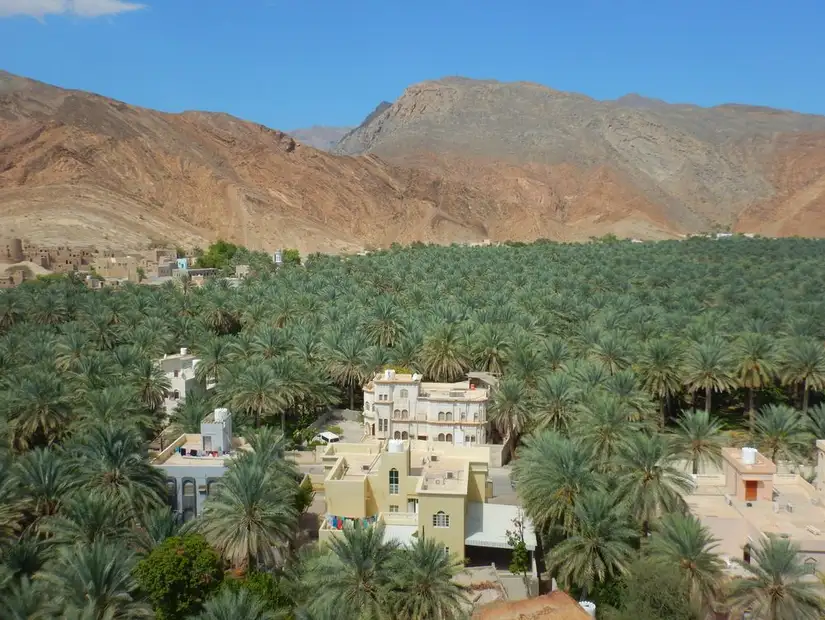
Oman's mountains provide a dramatic contrast to the coast. Jebel Akhdar is known for cooler temperatures, terraced villages, hiking routes, canyon views, and high-end mountain resorts. Access to the upper plateau is controlled, so travelers should confirm current vehicle and 4WD requirements before driving up.
Jebel Shams offers some of the country's most dramatic canyon scenery and popular hiking routes. Road conditions vary, making it important to choose a vehicle suited to the itinerary.
Sharqiyah Sands — Best for Desert Experiences
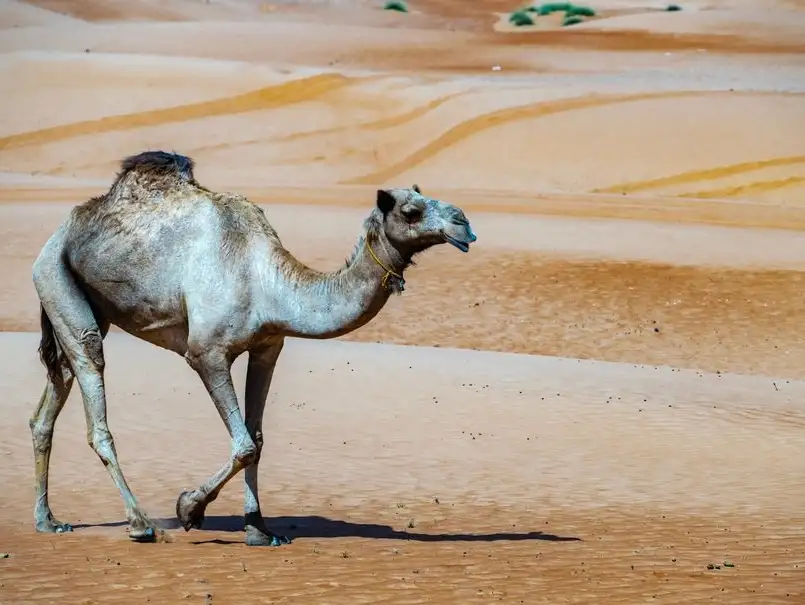
Sharqiyah Sands is one of the easiest ways to add a desert experience to an Oman road trip. Travelers can stay in desert camps, watch sunset from the dunes, stargaze, and experience a completely different landscape from Muscat and the mountains. Many itineraries combine the desert with Wadi Bani Khalid, allowing you to experience dunes and a wadi in the same part of the trip.
Sur & the Eastern Coast — Best for a Road Trip
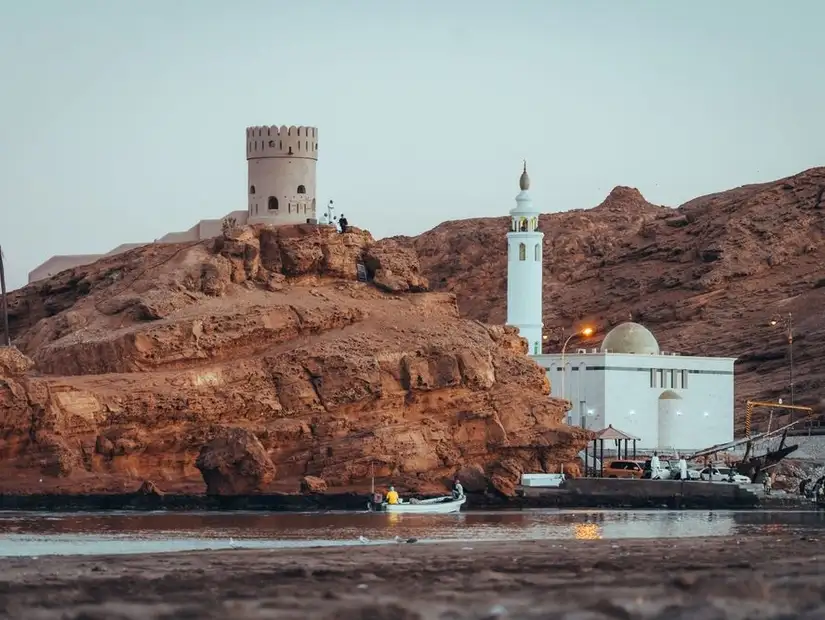
The journey between Muscat and Sur is part of the attraction. The eastern route combines coastal scenery, wadis, beaches, and small towns before reaching Sur, which has a long maritime and boat-building heritage. Travelers continuing farther south can also include the Ras Al Jinz area, particularly if wildlife and coastal nature are priorities.
Salalah — Best for a Summer Escape
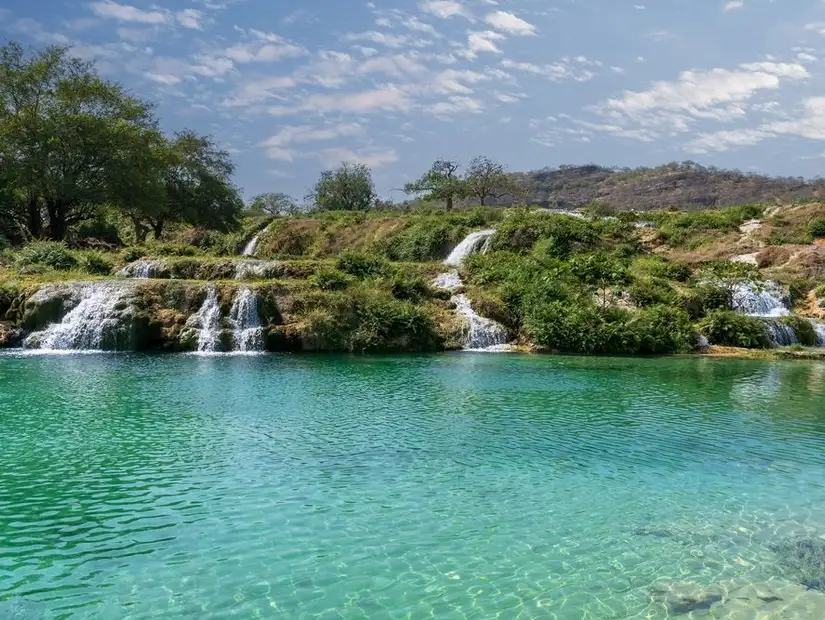
Salalah needs to be understood as two distinct seasonal experiences.
June to September: Khareef brings mist, greener mountains, seasonal waterfalls, flowing wadis, and cooler conditions compared with much of the Arabian Peninsula.
October to May: Conditions become sunnier and drier, making this period better suited to traditional beach holidays and outdoor exploration.
Salalah also has strong links to the historic frankincense trade, giving travelers more to explore beyond the scenery.
Best Oman Itineraries from the UAE

2-Day Weekend: Muscat
Keep the trip simple.
Day 1: Sultan Qaboos Grand Mosque, Mutrah, Old Muscat and dinner by the coast.
Day 2: Beach or resort morning, optional boat trip, then return to the UAE.
3-Day Long Weekend: Muscat + Nizwa or Jebel Akhdar
Spend your first day in Muscat, then travel inland on day two. Choose Nizwa if heritage is the priority or Jebel Akhdar if you want scenery, hiking, and a mountain resort.
4-Day Road Trip: Muscat → Nizwa → Mountains → Desert
This itinerary provides one of the best introductions to Oman. Start with Muscat, continue to Nizwa, spend a night in the mountains, then stay in Sharqiyah Sands before returning toward the capital.
Avoid adding too many additional stops.
5–7 Days: Mountains, Desert and Coast
With nearly a week, you can travel from Muscat through Nizwa and the mountains, continue into Sharqiyah Sands, and then reach Sur and the eastern coastline. This gives you a much better balance of culture, nature, driving, and downtime.
Summer Option: Salalah
For a UAE summer break, make Salalah the entire focus rather than trying to combine it with northern Oman. Spend three to five nights exploring beaches, mountains, waterfalls, wadis, and frankincense heritage sites around Dhofar.
Best Time to Visit Oman
- October to April is the most comfortable period for most of northern Oman, including Muscat, Nizwa, the mountains, desert, and coast.
- May can already be hot at lower elevations, although mountain areas remain cooler.
- June to September is very hot across much of northern and interior Oman, making sightseeing more demanding.
- Southern Oman is the major exception. Khareef transforms Salalah and parts of Dhofar during summer, creating one of the Gulf's most unusual seasonal travel experiences.
Where to Stay in Oman
Choose accommodation based on your itinerary rather than simply selecting the highest-rated hotel.
- Muscat beachfront: Best for resort facilities, couples, families, and relaxation.
- Central Muscat: Better if sightseeing and restaurants matter more than spending the day at a resort.
- Jebel Akhdar: Choose a mountain resort if views, cooler temperatures, wellness, and hiking are priorities.
- Sharqiyah Sands: Stay in a desert camp for sunset, stargazing, and early-morning dune scenery.
- Salalah beachfront: Works well for both Khareef trips and winter beach holidays.
- Musandam: Khasab is the most practical base for dhow cruises and exploring the peninsula.
Driving, Taxis and Getting Around
- A rental car is often the most flexible way to explore Oman outside Muscat.
- Taxis work well for airport transfers and shorter city journeys, but relying entirely on taxis becomes less practical for mountain, desert, and multi-stop itineraries.
- A standard 2WD is sufficient for many paved routes. A 4WD becomes more useful, or may be required, for certain mountain access roads, desert tracks, and remote areas.
- Distances can also be longer than they appear. Build time for fuel, meals, viewpoints, and breaks rather than treating every drive as a simple transfer.
- Download offline maps before entering mountain or desert regions where mobile coverage may become less reliable.
Oman Travel Etiquette for UAE Residents
- Oman is welcoming to visitors, but respecting local customs makes the experience more comfortable.
- Dress modestly when visiting mosques and traditional communities. Mosque entry requirements can be stricter than general sightseeing dress, particularly regarding covered shoulders, legs, and hair for women in prayer areas.
- During Ramadan, be especially considerate of local customs and changes to restaurant opening hours.
- Ask before photographing people, particularly in markets and smaller communities.
- Swimwear is appropriate at private resort beaches and pools but should not automatically be treated as suitable clothing in public villages, wadis, or family areas.
- When visiting wadis and deserts, take rubbish with you and avoid damaging vegetation or natural pools.
What to Pack for Oman
Bring clothing and equipment suited to the landscapes you plan to explore:
- High-SPF sun protection
- Comfortable walking or hiking shoes
- Lightweight layers
- Modest clothing for cultural sites
- Swimwear
- Water-friendly footwear for wadis
- Reusable water bottle
- Hat and sunglasses
- Offline maps
- Light jacket for mountain evenings or winter trips
Weather can differ significantly between the coast, desert, mountains, and southern Oman, so pack for your specific route rather than for the country as a whole.
Frequently Asked Questions
- Can UAE residents travel to Oman without a visa? It depends. GCC citizenship and UAE residency are not the same for immigration purposes. Non-GCC UAE residents should check eligibility using their passport nationality and GCC residence status before travel.
- Can I drive from Dubai to Oman? Yes, driving is a popular option, but you need the correct travel documents, vehicle documents, Oman-valid insurance, and any required cross-border authorization.
- How long is Dubai to Muscat? A nonstop flight takes roughly 1 hour 10 minutes. Driving time is considerably longer and varies with your starting point, route, border crossing, and queue.
- Is Oman good for a weekend trip? Yes. Muscat and Musandam are particularly suited to short trips, while three or four days allows you to add Nizwa, the mountains, or desert.
- Which part of Oman is closest to the UAE? Musandam borders the UAE and is one of the easiest parts of Oman to reach by road from the northern Emirates.
- When is Khareef season in Salalah? Khareef broadly runs from June to September, with the greenest landscapes and greatest visitor demand generally occurring during the heart of the season.
- Do I need a 4WD in Oman? Not for every trip. Most major roads are paved, but certain mountain roads, desert areas, and remote tracks require or strongly favor a 4WD.
- How many days are enough for Oman? Two nights are enough for Muscat, three to four days work for a short road trip, and five to seven days provide a better introduction to the country's mountains, desert, coast, and heritage.
Oman can be as simple or as adventurous as you want it to be. Choose Muscat for an easy first weekend, Musandam for a short drive from the UAE, the Hajar Mountains for cooler scenery, Sharqiyah Sands for desert nights, or Salalah when Khareef transforms southern Oman.
The biggest mistake is trying to see too much. Match the region to your available time, check entry and vehicle requirements before departure, and leave enough space in the itinerary to enjoy the landscapes rather than simply driving between them. Ready to explore Oman? Compare flights from the UAE and find the cheapest flight to Oman that works best for your with WINGIE today.

