An Ultimate Guide to Winter Tourism in Tabuk


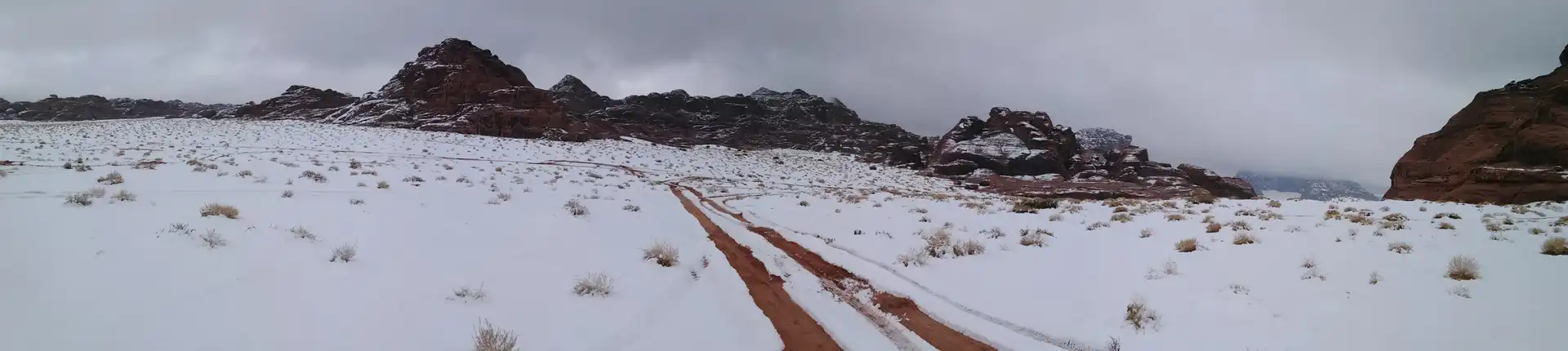
When people imagine Saudi Arabia, they often picture endless golden deserts, warm evenings, and landscapes shaped by sun and sand. Tabuk tells a very different story.
In the far northwest of the Kingdom, winter can transform the scenery in ways that feel almost unreal. High mountain peaks turn white after cold weather systems move through the region, while nearby valleys remain filled with sandstone cliffs, palm trees, and flowing springs. It is one of the few places where you can see snow on a mountain in the morning, then stand among warm-toned canyon walls before sunset.
Tabuk is not a traditional ski destination, and snow is never something visitors should assume will appear on a specific day. But during the coldest part of the year, the region offers one of Saudi Arabia’s most surprising travel experiences. From the snowy heights of Jabal Al Lawz to the calm beauty of Wadi Al Disah and the historic streets of Tabuk city, winter here feels like discovering a different version of the desert.
Geography of Saudi Arabia Desert Snow
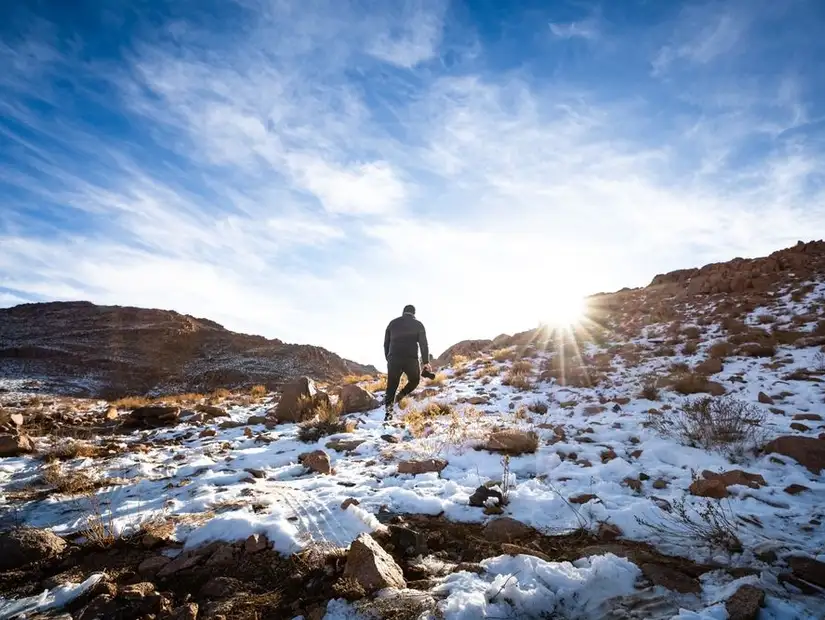
Snow in Saudi Arabia may sound impossible at first, but Tabuk’s geography explains why it happens. The region sits in the northwest of the country, close to Jordan and the Gulf of Aqaba, where the landscape rises into the Midian Mountains. Jabal Al Lawz, also known as Almond Mountain, is the highest peak in Tabuk Province, reaching around 2,549 meters above sea level.
At this altitude, winter temperatures can drop sharply when cold air reaches northern Saudi Arabia. While lower desert areas may remain cool and dry, the upper slopes can experience frost, sleet, and occasional snowfall. The result is one of the Kingdom’s most dramatic natural contrasts: dark granite mountains, pale desert terrain, and a brief blanket of white across the peaks.
Jabal Al Lawz is not the only mountain affected by winter weather. Nearby highlands such as Jabal Al Dhahr and Alaqan Mountain can also receive snow during the coldest periods. Still, Jabal Al Lawz remains the best-known winter destination thanks to its elevation, striking landscape, and easy association with Tabuk’s snow season.
The experience is not about expecting Alpine conditions. It is about witnessing something rare: a desert landscape changing character completely after one cold front. On some days, visitors find clear blue skies and cold mountain air. On others, mist settles around the road, and the peaks become almost invisible behind clouds. That unpredictability is part of the appeal.
Best Time for Tabuk Winter Travel
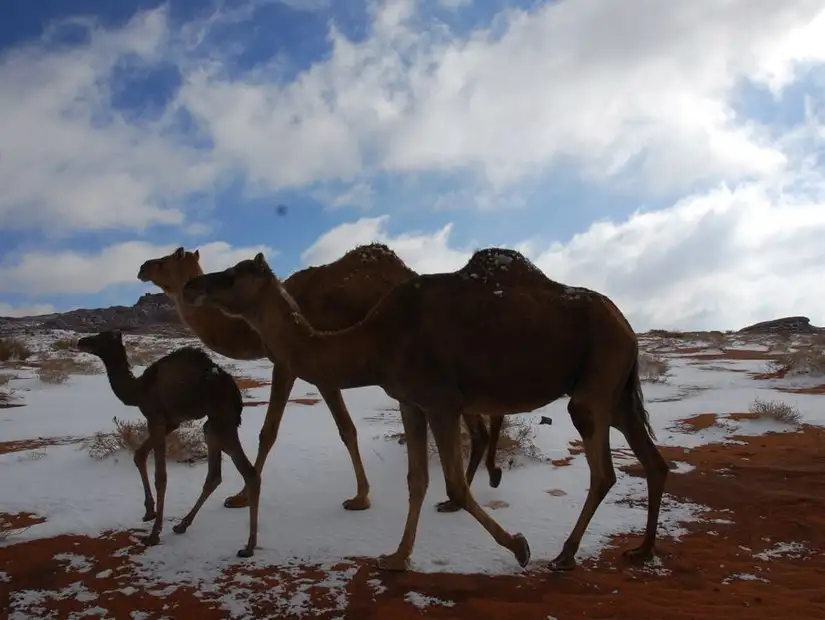
For travelers hoping to experience Tabuk at its coldest, the most promising travel window is generally between late December and mid-February. January is often considered the heart of Tabuk’s snow season, especially in the highlands around Jabal Al Lawz. This is when temperatures are most likely to fall low enough for snow to appear on the mountain peaks. Late December can also bring early winter weather, while the first half of February can still offer cold mornings, mountain frost, and occasional snowfall.
However, it is important to plan with flexibility. Snowfall is linked to weather systems, not a fixed calendar. You may visit in January and find clear roads, bright skies, and cold but dry conditions. Another visitor may arrive after a storm and see the mountain covered in snow within hours.
The best approach is to stay in Tabuk for at least two or three nights, especially if snow is your main goal. Check local weather forecasts before leaving your hotel, follow official announcements, and ask your accommodation or tour provider about road access. In winter, conditions can change quickly, especially in mountainous areas.
Even when there is no snow, Tabuk remains worth visiting during this period. The air is cooler, hiking is more comfortable, desert drives feel less intense, and cultural sites can be explored without the heat that shapes travel during the summer months.
Top Winter Activities in Tabuk
Watch the Snow at Jabal Al Lawz
Jabal Al Lawz is the center of Tabuk’s winter story. When snow falls, the mountain becomes a gathering point for visitors who want to see Saudi Arabia from an entirely unexpected perspective.
The safest way to enjoy the experience is to treat it as a scenic winter outing rather than a spontaneous mountain adventure. Check weather updates before you leave, travel early in the day, and avoid attempting difficult routes after sunset. Snow and ice can make mountain roads slippery, even when they look manageable from a distance.
A local guide or organized tour can make the day easier, particularly for travelers unfamiliar with the roads. They can help assess conditions, choose safe viewpoints, and make sure you are not driving toward an area that has been temporarily closed because of weather.
Pack layers rather than relying on one heavy coat. Temperatures can feel much colder at higher altitudes, especially with wind and fog. A waterproof outer layer, gloves, sturdy shoes, drinking water, snacks, and a fully charged phone are all essential.
The most memorable part of Jabal Al Lawz is often not the snow itself. It is the contrast. One moment you are standing beside a snow-covered slope; the next, you are looking out over a vast desert horizon shaped by rock, sand, and distant mountain ranges.
Explore Wadi Al Disah
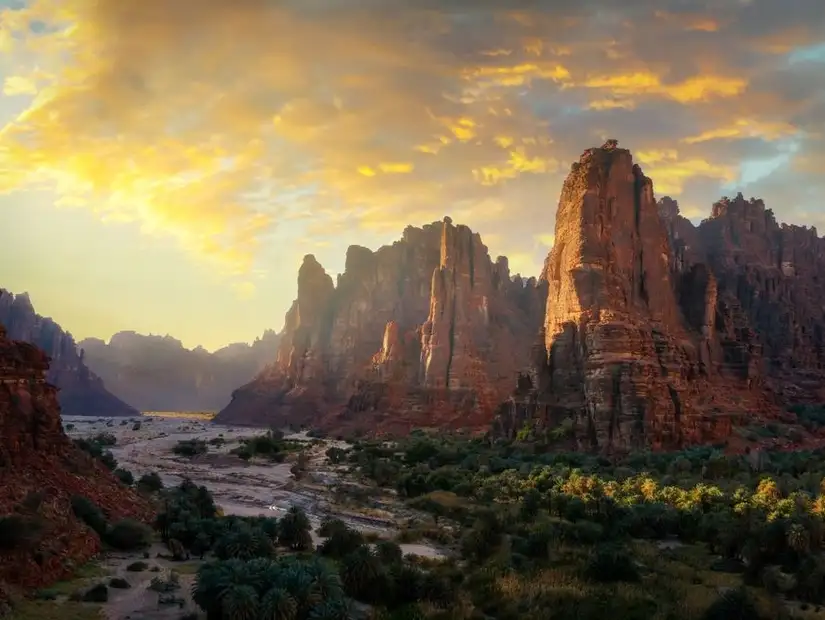
After the cold, exposed heights of Jabal Al Lawz, Wadi Al Disah offers a completely different side of Tabuk. Located within the Prince Mohammed bin Salman Nature Reserve, Wadi Al Disah is a dramatic valley known for towering rock formations, palm trees, freshwater springs, and long sandstone passages that feel almost cinematic. Its landscape is softer, greener, and lower in elevation than the snowy mountain areas.
This is where Tabuk’s winter contrast becomes most visible. While the peaks of Jabal Al Lawz may be cold enough for snow, the floor of Wadi Al Disah remains relatively mild, with sunlight reaching through the canyon walls and palms growing beside the water.
Winter is one of the most comfortable times to explore the valley. Walking routes feel easier, the air is fresh, and the lower temperatures make long outdoor days more enjoyable. The valley is especially beautiful in the late afternoon, when the sandstone cliffs shift between gold, orange, and deep red.
For the best experience, visit with a local guide who understands the terrain and current conditions. Some areas may involve uneven ground, shallow water crossings, or soft sand. It is a place to explore slowly, not rush through.
Discover Tabuk Castle and the Hijaz Railway Station
Winter in Tabuk is not only about landscapes. It is also a chance to explore a city shaped by centuries of travel, pilgrimage, and trade. Tabuk Castle is one of the city’s most important historical landmarks. Originally built during the Abbasid period and restored several times over the centuries, the fort reflects Tabuk’s role as a stop along the historic pilgrimage route between the Levant and Madinah.
Walking through the castle gives you a quieter, more reflective side of the region. Its stone walls, courtyard, mosque, and watchtowers tell a story that feels very different from the surrounding mountains and valleys. Visit in the morning or late afternoon, when the weather is cooler and the light makes the structure especially photogenic.
A short distance away, the Hijaz Railway Station adds another layer to Tabuk’s history. The station was once part of the railway route linking Damascus and Madinah, and the first train arrived in Tabuk in 1906. Today, the restored station stands as a reminder of a time when pilgrims and travelers crossed the region by rail instead of road.
Together, Tabuk Castle and the Hijaz Railway Station create a perfect winter day for travelers who want to balance outdoor adventure with culture. Begin with historic exploration in the city, then end the day with a warm meal and a quiet evening before heading into the mountains or valleys the following morning.
Winter Mountain Transportation Safety
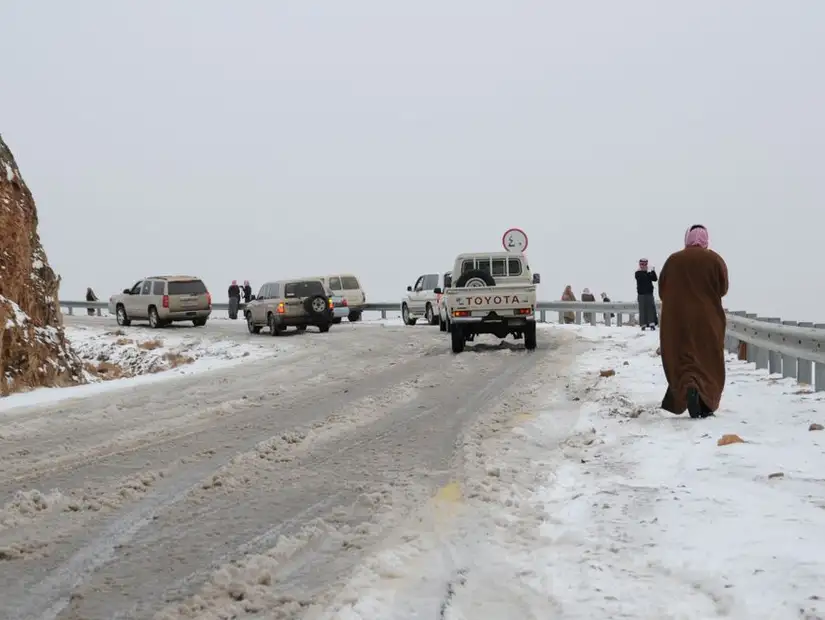
Winter travel in Tabuk requires a different mindset from city travel in Riyadh or Jeddah. Roads toward mountain areas can become slippery, foggy, muddy, or crowded after snowfall, especially around Jabal Al Lawz.
For snowy mountain routes, a four-wheel-drive vehicle should be treated as essential rather than optional. It offers better control on uneven terrain, wet surfaces, and road shoulders that may be soft after rain or snow. However, a 4WD vehicle alone does not make a journey safe. Conditions can change quickly, and access may be restricted depending on weather, road safety, or crowd levels.
The safest option is to book a licensed local driver, organized winter tour, or experienced guide who knows the area. They will be more familiar with road conditions, safe stopping points, and alternative routes if the main road is closed.
Avoid driving into mountain areas at night, especially after rain or snow. Keep your fuel tank full before leaving Tabuk city, download offline maps, carry water and warm clothes, and make sure your phone is charged. Do not leave marked roads or attempt steep trails without local advice.
Most importantly, follow official weather and road instructions. If authorities advise against mountain travel, it is better to change your plans than to take unnecessary risks. Tabuk’s winter beauty is at its best when experienced with patience, preparation, and respect for the landscape.
Snow in the desert may be one of Saudi Arabia’s most unexpected sights, but Tabuk offers much more than a single weather moment. It is a destination where mountains, valleys, historic routes, and winter skies come together in one unforgettable journey. Book your flight to Tabuk with WINGIE, plan your winter escape around the season’s changing landscapes, and discover a side of Saudi Arabia that feels completely different from anything you expected.
You may also like:

