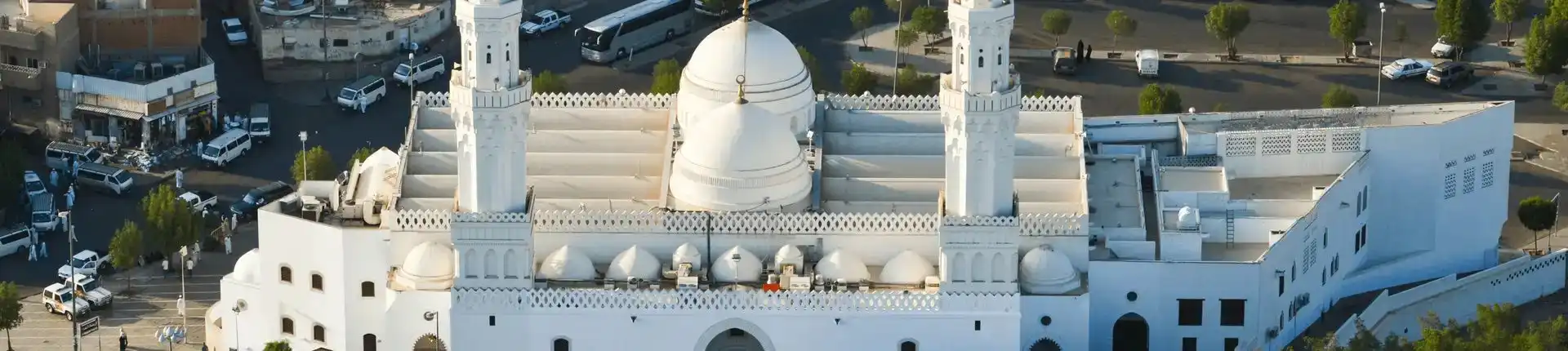
An Ultimate Guide to Masjid Al Qiblatain


In the heart of Madinah, Masjid Al Qiblatain stands as one of the city’s most meaningful Islamic landmarks. The mosque is intricately linked to one of the most important moments in Islamic history, when the direction of prayer was changed from Bayt Al Maqdis in Jerusalem to the Kaaba in Makkah. Today, it is not only a place of worship, but also a destination for visitors who want to understand the spiritual and historical depth of Madinah.
Thanks to its accessible location and religious significance, Masjid Al Qiblatain is considered an essential stop for many visitors to Madinah. It offers a calm spiritual atmosphere, distinctive Islamic architecture, and a direct connection to a defining moment in the history of Muslim worship.
About Masjid Al Qiblatain
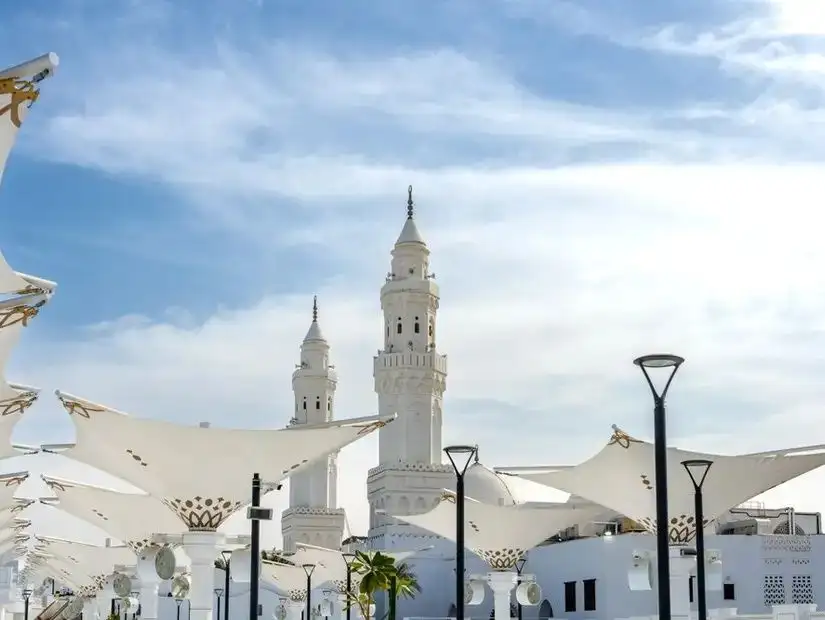
Located in the western part of Madinah, Masjid Al Qiblatain is known for its bright white exterior, twin domes, and peaceful setting. Its name means “the Mosque of the Two Qiblas,” referring to the historic event when the qibla was changed during the Prophet Muhammad’s time.
The mosque remains one of Madinah’s most recognized religious landmarks. For many visitors, it is a place where history, faith, and architecture come together in a simple yet powerful way.
Where is Masjid Al Qiblatain located?
Masjid Al Qiblatain is located on Khalid ibn Al Waleed Road in Madinah, around 4 km from Al Masjid An Nabawi. It is associated with the Banu Salamah area and is built on the elevated grounds of Harrat Al Wabarah, making it easy to reach from different parts of the city.
Why is it Called Masjid Al Qiblatain?
The mosque is called Masjid Al Qiblatain because it is associated with the change of the qibla from Bayt Al Maqdis to the Kaaba. According to historical accounts, the Prophet Muhammad was performing Dhuhr prayer among Banu Salamah when the revelation came instructing him to turn toward Al Masjid Al Haram in Makkah. After completing two rak‘ahs, he turned toward the Kaaba, and the companions followed him.
This moment gave the mosque its lasting significance. Visitors come not only to see the site, but also to reflect on a moment that represents obedience, unity, and the deep spiritual connection between Muslims and the Kaaba.
Historical Background
Masjid Al Qiblatain dates back to the early Islamic period and is linked to the second year after Hijrah. Over the centuries, it has received attention from several rulers and authorities due to its religious importance.
The mosque was renovated during the time of Umar ibn Abd Al Aziz in 87 AH. It was later restored by Shahin Al Jamali in 893 AH. In the Saudi era, King Abdulaziz ordered an expansion in 1350 AH, and the mosque was rebuilt during the reign of King Fahd in 1408 AH. It also received further care and maintenance during the reigns of King Abdullah and King Salman.
Architecture of Masjid Al Qiblatain
Masjid Al Qiblatain is known for its elegant and balanced Islamic architecture. The mosque includes service facilities, a main prayer hall, a women’s gallery, a courtyard with trees, two minarets, and two domes. These features give the mosque a calm and distinctive character while maintaining its historical identity.
The mosque’s current structure reflects both its spiritual importance and the architectural style of Madinah’s historic mosques. Its open spaces, white exterior, and organized prayer areas make it comfortable for worshippers and visitors throughout the day.
Recent Development of Masjid Al Qiblatain
Masjid Al Qiblatain has recently been developed as part of the Qiblatain Mosque and Cultural Center project, led by the Madinah Region Development Authority. The wider site now covers more than 265,000 m², while the mosque itself covers more than 3,900 m² and can accommodate over 20,000 worshippers. The development also includes improved courtyards, visitor pathways, service areas, and more than 300 parking spaces for cars and buses.
The project aims to improve the overall visitor experience while preserving the mosque’s religious and historical value. In 2025, Masjid Al Qiblatain and its cultural center received more than eight million visitors between February and December, reflecting its growing importance as a religious and cultural destination in Madinah.
Things to Do at Masjid Al Qiblatain
Perform the Five Daily Prayers
Masjid Al Qiblatain offers visitors the opportunity to pray in a place deeply connected to Islamic history. Its peaceful setting makes it a meaningful place for reflection and worship.
Join Congregational Prayer and Dhikr
Visitors can also take part in congregational prayers and moments of dhikr. This allows worshippers to experience the mosque’s spiritual atmosphere together with others from around the world.
Explore the Mosque’s Historical Significance
A visit to Masjid Al Qiblatain gives you the chance to learn more about the story of the qibla change and its importance in Islamic history. The mosque’s design and setting help visitors connect with this moment in a clear and memorable way.
Admire the Architecture
The mosque’s two domes, two minarets, clean white exterior, and peaceful courtyard make it one of Madinah’s visually distinctive landmarks. The surrounding trees and open areas also add to the calm atmosphere.
Take Memorable Photos
Visitors can take photos of the mosque’s exterior, courtyard, domes, and minarets. As with all religious sites, it is best to remain respectful of worshippers and avoid taking photos during prayer times.
Enjoy Quiet Reflection
Beyond its historical value, Masjid Al Qiblatain is a peaceful place to pause, reflect, and enjoy a moment of calm away from the busy streets of Madinah.
Pro Tips for Visiting Masjid Al Qiblatain
• Best time to visit: Aim for mid-morning, around 08:00 to 10:00. This is usually after the early morning prayer rush and before the midday heat and larger tour groups.
• Accessibility: As part of the latest development project, Masjid Al Qiblatain is being upgraded with improved accessibility features, including elevators and escalators, along with expanded visitor facilities.
• Stay hydrated: Madinah can get very hot, especially in summer. Carry water with you and use the drinking water facilities available on site where provided.
• The former second mihrab: The mosque is known for its connection to the change of qibla from Jerusalem to Makkah. The earlier Jerusalem-facing mihrab was removed during past renovations to avoid confusion during prayer, while the current prayer direction faces Makkah.
• Cultural Center: The recent development project includes a Cultural Center designed to enrich the visitor experience and highlight the mosque’s religious and historical importance. Check on site for any exhibitions or visitor displays available during your visit.
• Dress code: Modest clothing is required when visiting the mosque. Women should wear loose, modest clothing and cover their hair inside the mosque. An abaya is commonly worn and recommended. Men should ensure their shoulders and knees are covered.
• Shoe protocol: Bring a small drawstring bag for your shoes. Shoe racks are available, but keeping your shoes with you can be easier during busy visiting times.
• Photography etiquette: Photos of the architecture are generally acceptable but avoid photographing people while they are praying. It is considered disrespectful and may disturb worshippers.
• 24-hour access: Since 6 October 2025, Masjid Al Qiblatain has been directed to remain open 24 hours a day, allowing worshippers to visit and pray at any time.
• Transport: Ride-hailing apps such as Uber and Careem are among the easiest ways to reach the mosque. The drive from the Prophet’s Mosque area usually takes around 10 to 15 minutes, depending on traffic. The City Sightseeing Hop-On Hop-Off Red Route also stops at Al Qiblatain Mosque, which can be a useful option for visitors exploring several historic sites in Madinah.
A visit to Madinah would not feel complete without seeing Masjid Al Qiblatain. It is a landmark where Islamic history, spirituality, and architecture meet in one meaningful place. Whether you are visiting for prayer, reflection, or cultural discovery, the mosque offers a memorable experience that adds depth to your journey through Madinah. If you are planning a flight to Madinah, you can compare travel options on WINGIE and book the choice that best suits your plans.
You may also like:
- Top Attractions in Madinah
- Best Malls and Souqs in Madinah
- Top 15 Restaurants in Madinah
- 10 Best Brunch / Breakfast Restaurants in Riyadh
- A Comprehensive Guide to Al Nakheel Mall in Riyadh
- A Comprehensive Guide to Hayat Mall in Riyadh
- Top 7 Malls in Riyadh
- Top 20 Family-Friendly Destinations in Riyadh
- Top 10 Restaurants in Riyadh
- Top 10 Attractions in Riyadh
- Al Nakheel Park and Top 6 Activities to Do
- Guide to Taibah Markets in Riyadh
- Guide to Riverwalk in Riyadh

