An Ultimate Guide to Street Food in Deira and Karama


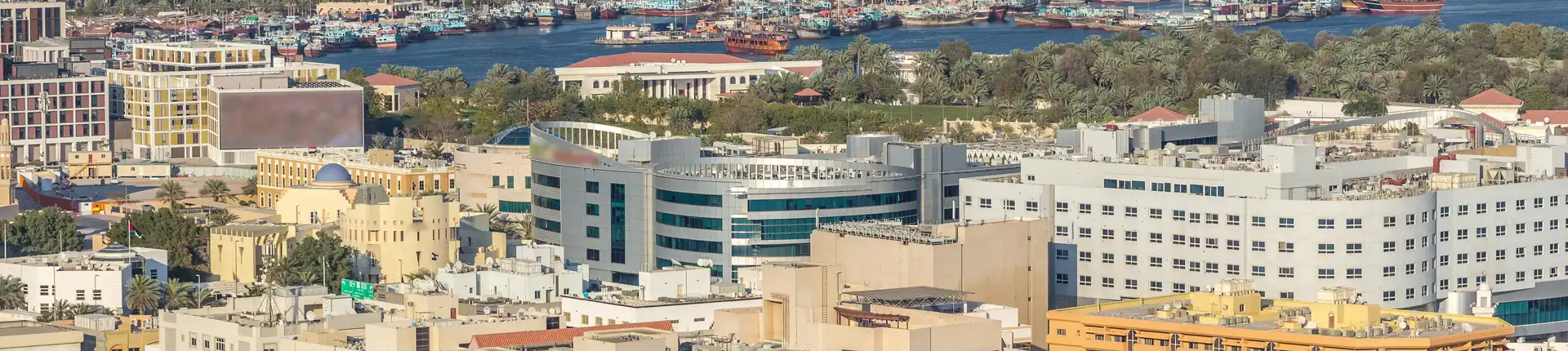
Dubai may be famous for rooftop restaurants, celebrity chefs, and glittering dining rooms, but some of the city’s most memorable meals are found far from the fine-dining spotlight. To taste Dubai at street level, head to Deira and Karama, two neighborhoods where the city’s multicultural food story is served through small cafeterias, family-run restaurants, bakeries, juice shops, grills, and late-night snack counters.
In this article, we'll explore the essential dishes, vibrant neighborhoods, and hidden local spots across Deira and Karama, giving you the ultimate blueprint for a self-guided Dubai street food crawl.
Why Deira and Karama?
Deira and Karama show a side of Dubai that many first-time visitors miss. These neighborhoods feel lived-in and local, shaped by the communities that have helped build the city’s everyday rhythm. Instead of polished dining districts, you will find crowded pavements, casual tables, neon signs, open kitchens, and menus that move easily between Arabic, South Asian, Filipino, and regional comfort food.
They are also ideal for travelers who want to eat well without turning every meal into a big reservation. Come hungry, bring a few friends, and treat the evening like a moving feast. The best way to enjoy these areas is not to sit down for one long dinner, but to taste a little of everything.
Deira’s Old-City Energy
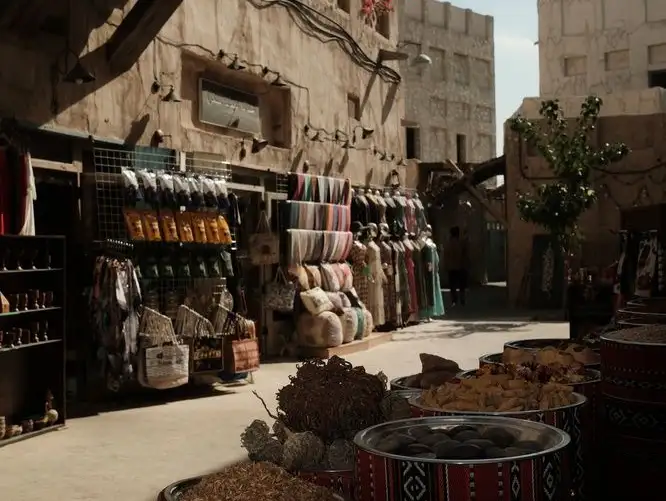
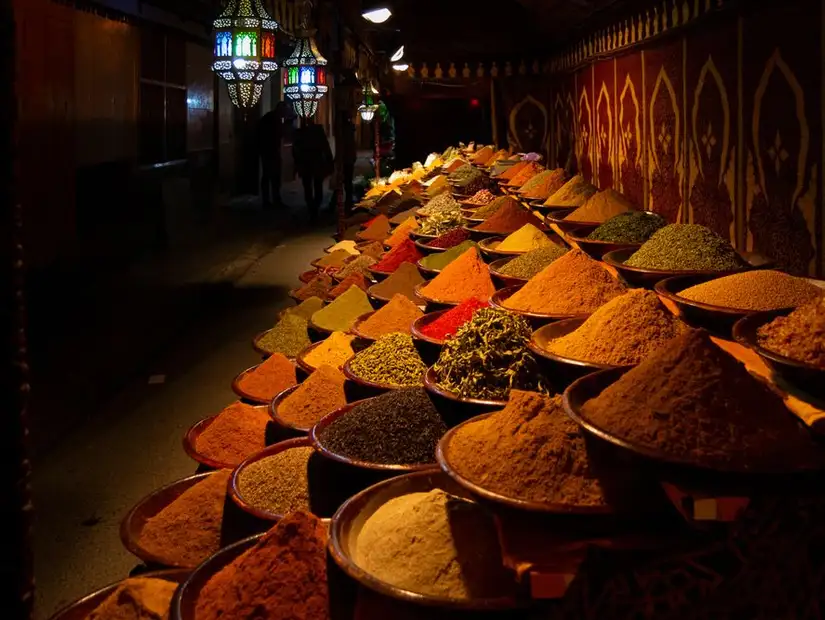
Start in Deira, one of Dubai’s most atmospheric neighborhoods. This is where the city’s trading past still feels close, with souks, creekside streets, spice shops, abra stations, and casual eateries packed into a busy old-city setting.
The food here reflects the movement of people and goods through Dubai over generations. Around the souks and market streets, you can find shawarma counters, grilled meats, Arabic bakeries, South Asian cafeterias, fresh juice shops, and simple snack spots serving people on the move.
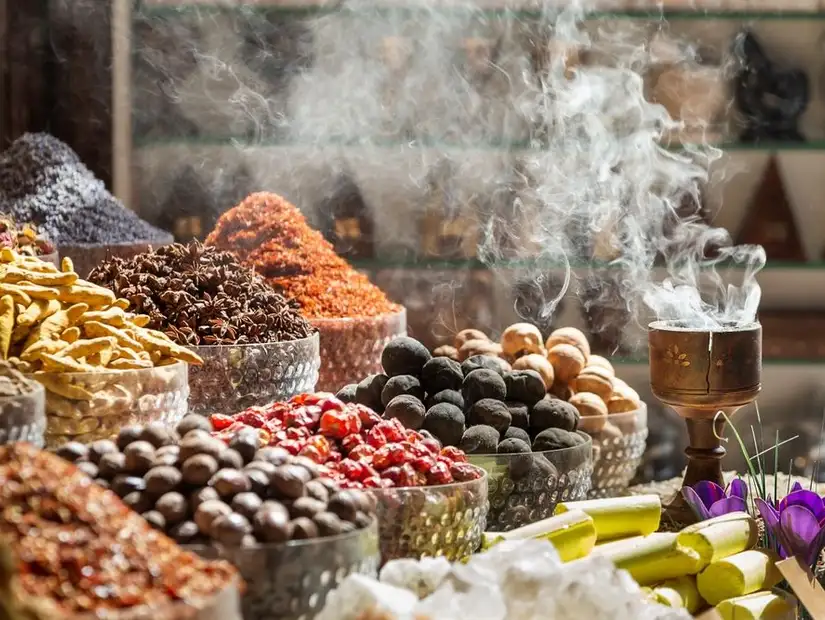
Begin with a walk near the creek or through the souk area before dinner. The smell of spices, the sound of shopkeepers, and the sight of trays, grills, and juice blenders all set the tone. Deira is not about slow, formal dining. It is about quick bites, strong flavors, and the feeling that something delicious is always just around the corner.
What to Try in Deira
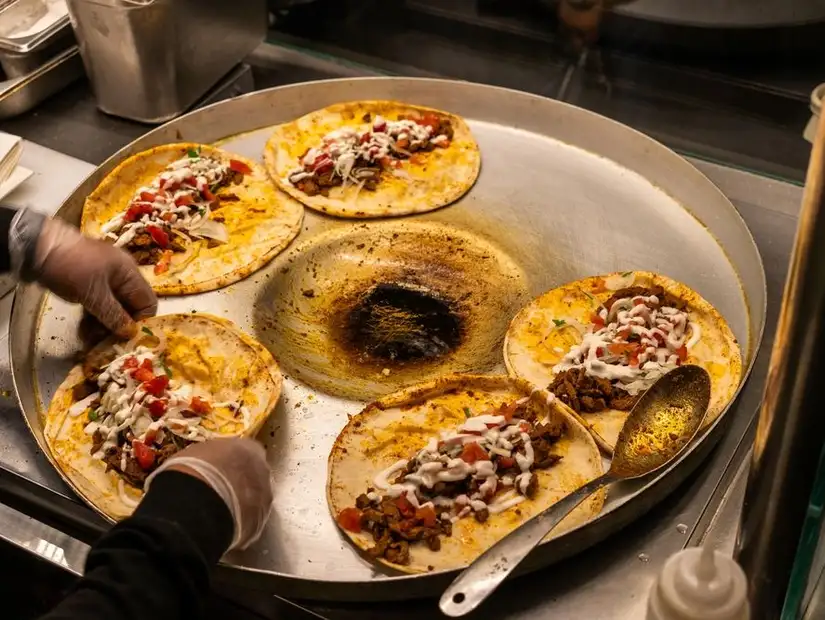
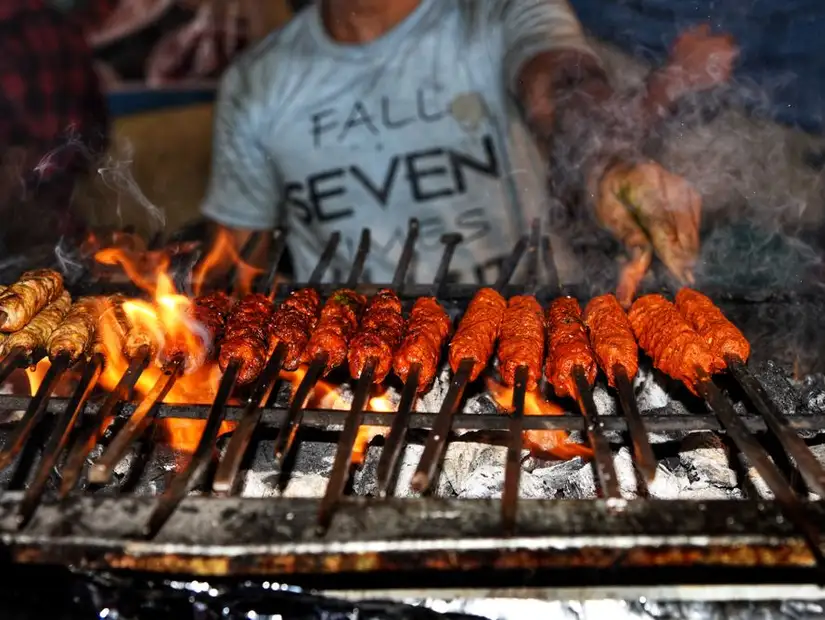
A Deira food walk should start with the classics. Shawarma is an easy first bite: warm bread, grilled meat, garlic sauce, pickles, and just enough mess to make it satisfying. Falafel is another must-try, especially when served hot and crisp with tahini, salad, and fresh bread.
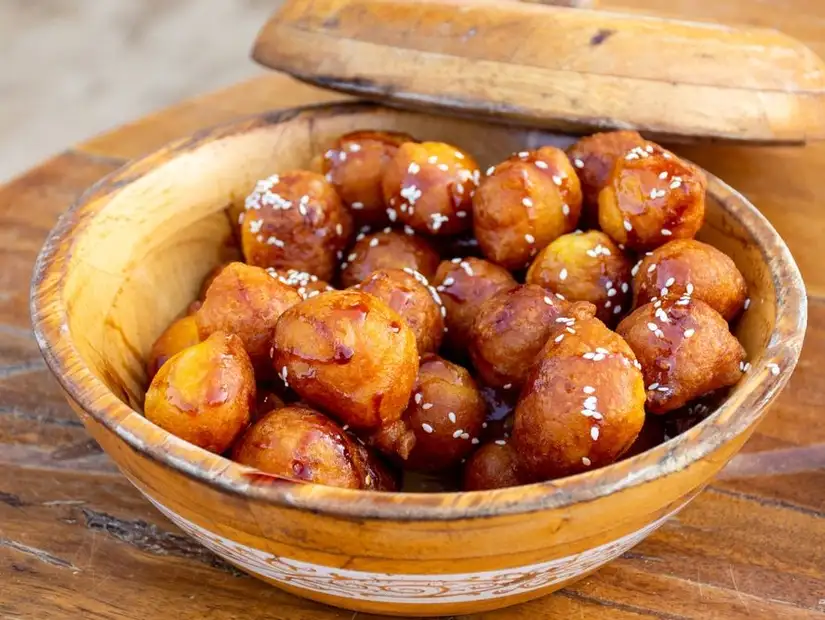
For something sweet, look for luqaimat, small golden dumplings often served with date syrup or honey. They are simple, comforting, and perfect for sharing. Karak tea is essential too. Sweet, milky, and spiced, it is less of a drink and more of a Dubai ritual.
Fresh juices are another Deira favorite. Mango, avocado, pomegranate, and mixed fruit juices are widely available and ideal between heavier snacks. If you are near market areas, grilled seafood can also be a great choice, especially for travelers who want something casual but more filling.
The key is to pace yourself. Deira rewards curiosity, so leave room for whatever catches your eye.
Karama’s Multicultural Comfort Food
After Deira, head to Karama for the second half of the tour. If Deira is old-city energy, Karama is comfort food central. It is one of Dubai’s best casual dining neighborhoods, known for affordable restaurants, busy streets, and a strong mix of Indian, Pakistani, Filipino, Lebanese, and other expat food cultures.
Karama is the kind of place where dinner can easily turn into a snack crawl. One table might be sharing biryani, another digging into chaat, while someone nearby orders manakeesh, noodles, grilled meat, or dessert. It is relaxed, noisy, and full of choice.
This neighborhood is especially good for travelers who want Dubai’s everyday food culture rather than a curated restaurant experience. Many of the best meals here are simple: a plate of something spicy, fresh bread, a cold juice, and a bill that feels surprisingly reasonable.
What to Try in Karama
Karama is a great place to explore South Asian street food. Start with chaat, a broad category of crunchy, tangy, spicy snacks that can include potatoes, chickpeas, chutneys, yoghurt, sev, and fresh herbs. Pani puri is another essential: crisp hollow shells filled with spiced water, potato, and chutney, eaten in one bite.
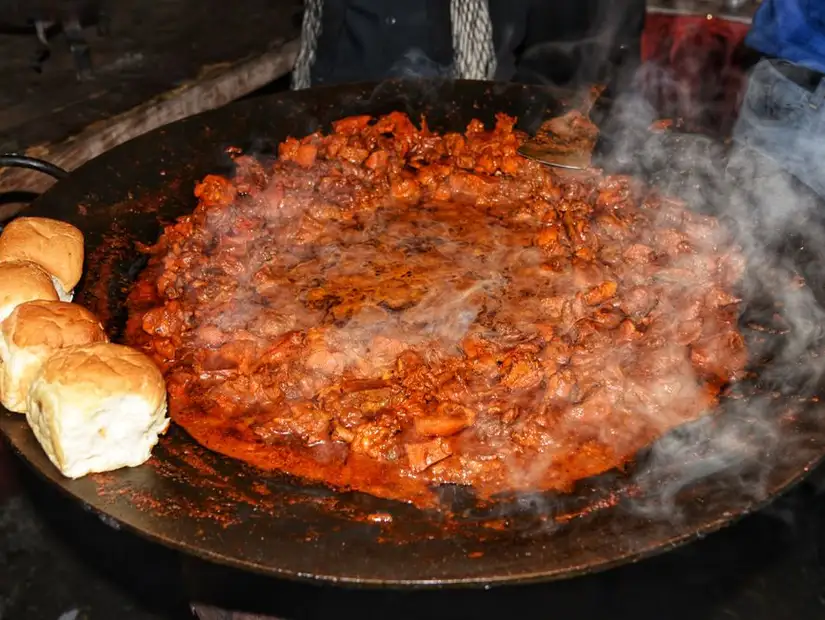
Vada pav is a strong choice for something more filling. Often described as an Indian-style potato burger, it combines a spiced potato fritter with soft bread and chutney. Dosa is another favorite, especially for travelers who prefer something crisp, savory, and vegetarian-friendly.
For a proper meal, biryani is hard to skip. Fragrant rice, spices, and meat or vegetables make it one of the most satisfying dishes to share. Manakeesh adds a Levantine note to the route, with warm flatbread topped with cheese, za’atar, or minced meat.
Karama is also a good place to look for Filipino snacks, casual bakeries, karak tea, and budget desserts. The neighborhood’s strength is variety, so do not be afraid to mix cuisines in one evening.
How to Plan Your Food Walk
The best time to start is late afternoon. Begin in Deira while there is still enough light to explore the creek, souks, and surrounding streets. Have a few small bites, then move to Karama in the evening when the restaurants and snack spots are at their busiest.
Go with a small group if possible. Sharing dishes lets you try more without getting full too quickly. Carry some cash, as smaller eateries may not always be ideal for card-only payments. Comfortable shoes are important too, because this is a walking-and-snacking kind of evening.
Keep the plan flexible. Choose a few must-try dishes, but leave space for recommendations from staff, shopkeepers, or locals. Some of the best stops are the ones you did not plan.
Tips for Travelers
Dress comfortably and modestly, especially if you plan to walk through souks or more traditional areas. Dinner hours can get busy, so expect queues at popular casual spots. If you are sensitive to spice, ask before ordering; many dishes can be adjusted, but not all.
Vegetarian travelers will find plenty of options, especially in Karama, where dishes like dosa, chaat, pani puri, falafel, and manakeesh are easy to enjoy. For the best experience, ask simple questions: “What is popular here?” or “What should I try first?” In neighborhoods like these, recommendations often lead to the most memorable bites.
Deira and Karama tell Dubai’s story through food. One neighborhood brings the old trading city to life through souks, creekside streets, grills, juices, and Arabic sweets. The other celebrates the communities that make Dubai’s everyday dining scene so rich, from South Asian snacks to Filipino bites, Lebanese breads, budget desserts, and late-night comfort food.
Together, they offer one of the most flavorful ways to understand the city. Dubai may shine through its skyline, but in Deira and Karama, it speaks through spice, steam, tea, bread, and the sound of busy tables. Start planning your getaway today and check out WINGIE’s exclusive deals to find the cheapest flights to Dubai.
You may also like:
- Best Couple Massage Spots in Dubai
- Top Lebanese Restaurants in Dubai
- Best Sushi in Dubai
- Best Restaurants in Dubai Mall
- Top 10 Things to Do in Dubai Marina
- Best Beach Clubs in Dubai
- Most Romantic Restaurants in Dubai
- Top 10 Ice Cream Spots in Dubai
- Best Board Game Cafes in Dubai
- Top Souvenir and Gift Shops in Dubai
- Best Affordable Restaurants in Dubai
- Top 10 Indoor Play Areas in Dubai
- Best Rooftop Pools in Dubai
- Top Private Beaches in Dubai
- Best Parks in Dubai
- Best Rooftop Pools in Dubai

